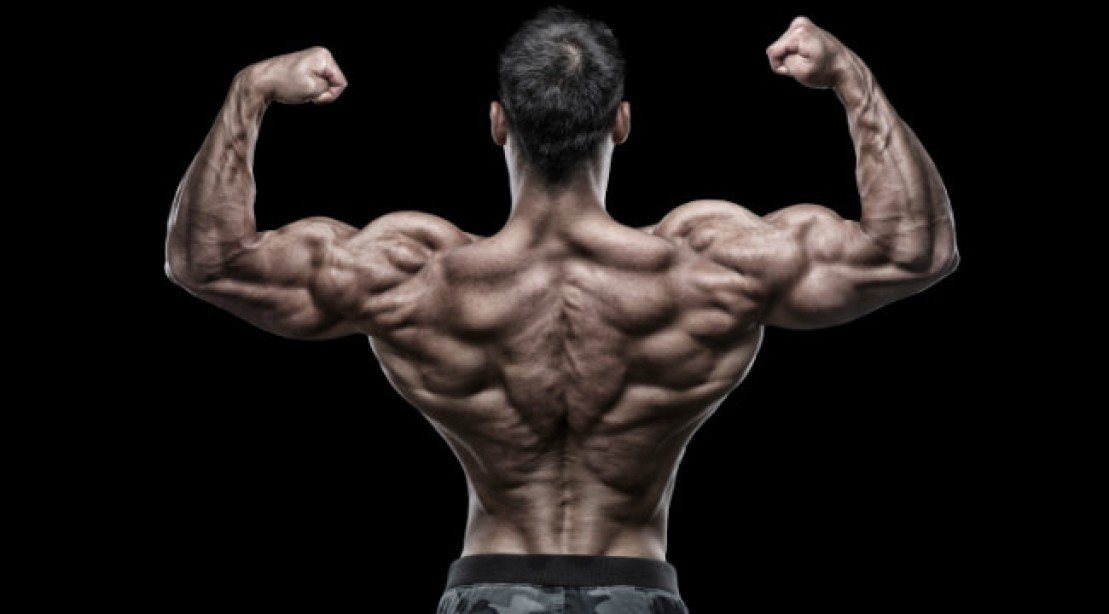
Like any awesome machine, your body works in a progression of governing rules. Exhaust one territory and you'll need to spread the adoration to whatever remains of your body eventually; unless you couldn't care less about damage aversion or looking imbalanced.
Indeed, you attempt to work your whole body. What's more, you utilize a wide assortment of developments. Be that as it may, there's dependably a reason why–despite your best efforts–you still don't look the way you need.
Overtraining your rear muscles could be the sharpest overhaul you ever make to your workouts.
Regardless of whether, you need to truly look solid and intense, provocative and smooth, or simply be better about harm counteractive action so you have less a throbbing painfulness, it's in many cases the muscles you don't find in the mirror that are most imperative (and frequently underworked).
Before you recommend that columns, pullups, and deadlifts have you secured (all extraordinary activities, incidentally), it's essential to know why overtraining your rear muscles could be the most brilliant update you ever make to your workouts.
Think about this as a well ordered procedure to help you recognize regular defects or holes in your preparation, and what you can in a split second do to move a standout amongst the most widely recognized shortcomings into a quality.
1: Ignoring Mobility
Poor postural propensities such a slumping for amplified timeframes result in a forward bowed upper back stance called kyphosis. It's an untidy name with some similarly revolting consequences. (Simply think extremely adjusted upper back, which abandons you slumped over.) Spend enough time in a kyphotic stance and your spine will adjust and solidify in this arrangement.
Not an enthusiast of the hunchback look? Great, then continue perusing.
This normal issue causes upper back torment as well as debilitates the critical muscles that move and balance out your shoulder bones, which can bring about shoulder issues. Keeping your thoracic spine portable (the segment from your shoulders to your tailbone) keeps your shoulders sound as well as gives a more viable establishment to playing out your pulling practices with the goal that you can see better outcomes.
Your Exercise Rx: Bird pooches, side lying windmills, thoracic revolution, thoracic scaffold + inclined cobra
2: Not Adjusting Your Push-Pull Ratio
Overwhelming, visit utilization of squeezing activities like seat presses may bring about the presence of better-looking muscles, expanded size, or quality, however they additionally increment firmness in your trunk and front shoulder muscles. Without an equivalent adjust of solidness and strong advancement over your shoulder joint and upper back, you'll unavoidably create adjusted shoulders that looks awful as well as plays Judas on a foundational guideline of harm counteractive action.
Here's the reason: squeezing practices normally require a push and cause interior pivot of your shoulders. It's the inner turn (which is a piece of such a variety of activities) that in the end causes your shoulders to round internal.
While everybody is distinctive, a great proportion to consider is 2 pulling developments for everybody 1 pushing development (at least) for abdominal area works out. In case you're taking a gander at your lower body, a similar thought applies, as you'll need to do 2 to 3 pulling/back chain developments (think deadlifts) for each 1 pushing/quad prevailing development (like squats).
In particular: ensuring you incorporate activities with outside turn. That is on the grounds that despite the fact that pulling activities should be possible at a high recurrence, a significant number of them (like pulldowns or pullups) drive a considerable measure of inner revolution of your shoulders, which can at present prompt to undesirable adjusting, changed stance, and even torment and harm.
Your Exercise Rx (for outer revolution): Face pulls, Prone ITY
3: Forgetting the Bottom Half (Of Your Traps)
It's anything but difficult to think about your back as only one goliath muscle, however that is not exactly how it functions. A standout amongst the most surely understood is the trapezius (traps), which a great many people simply consider as the muscle that crosses over any barrier between your neck and shoulders.
Your trapezius muscle really has three sections. The vast majority (particularly folks) just take care of upper trapezius by doing unlimited arrangements of shrugs with an end goal to look "burdened."
In the event that you truly need to look burdened, keep your shoulders solid, and enhance your squeezing quality, you need to hit your lower traps at any rate as hard as your upper traps.
Issue is, you don't perceive the significance of your lower traps (or how frail they are) for damage counteractive action.
Consider it along these lines: your lower traps exist to help reinforce, bolster, and give dependability to your shoulder bones (scapula). Keep in mind, how you simply found out about the imperative of accomplishing more pulling activities than pushing? All things considered, you can do that without flaw, however in the event that you don't have solid lower trap muscle to balance out your shoulder bones, you're not just more prone to lift less weight, you're additionally more prone to overlook a standout amongst the most critical muscles for damage counteractive action
Ever had a seat squeeze damage or shoulder harm from overhead squeezing? One of the main spots to look is your lower traps.
Your Exercise Rx: Hanging scapular withdrawal, scap pushups, and every one of the activities from misstep #2.
4: Cheating on Your Chinups
It's normal for you to be better at the shrugging upward movement than shrugging descending. Lamentably, this is a major issue for all back activities.
The upward movement debilitates your shoulder support (the structure that controls development), therefore making a solid draw practically outlandish.
Need to know why you can't pull more weight and stay stuck at a similar weight? This is what you can settle to change that.
You can conquer this awkwardness by situating yourself at the highest point of the chinup with your trunk touching the bar and your shoulder bones pulled in reverse and descending. Perform delayed holds (isometrics) and even weighted holds in this position and in a matter of seconds you'll see that you can pull more weight.
Your Exercise Rx: Isometric chinups (palms confronting toward you) and pullups (palms confronting far from you)
5: Oversimplifying Your Rowing Technique
This is the thing that most paddling resembles: Your arm hangs down to make an extend in your back. Without much thought, you pull your arm back, driving with your elbow, and attempt to bring the weight back beyond what many would consider possible and work your muscles.
It looks right. What's more, it sounds right. In any case, the outcome is really bringing on a forward move of your shoulder joint and expanding weight on the front of your shoulder, and additionally making a weaker draw. By starting pulling practices with withdrawal, or a pulling back of your shoulder bone and after that finishing the force, you'll have your arm in more secure, more grounded position to move more weight and assemble more muscle. Presently, this does not mean you need to keep your shoulder in a withdrew (pulled back) position the whole time. Each individual's body is somewhat extraordinary, so it's imperative to permit you to move inside your own particular scope of movement. That implies you have an extend at the base, pull your elbow and shoulder bone back, press at the top, and after that arrival back to the beginning position.
Your Exercise Rx: Dumbbell Rows and Cable Rows with scapular withdrawal
6: Your Never Practiced Deadlift Progressions
Do a brisk video look for deadlift on YouTube and you'll locate a bunch of exercise center stars flaunting their ghastly, damage really taking shape method. I'm not discussing genuine lifters following max lifts that are superhuman. Nobody is picture consummate while lifting 600 pounds. This is about right development.
Adjusting your lower back to pull a barbell from the floor really kills the strong musculature of your spine and uncovered the latent structures (like the tendons and the spinal circles) to unnecessary burdens that–given enough time–could conceivably end your quality preparing profession.
It additionally gives you a much weaker draw from the floor.Try this brisk practice to enhance your spinal arrangement and increment you're pulling potential.
Set up a vacant barbell in a squat rack at knee level. Expect a baseball short stop's position with hands on your knees. Keeping your shins vertical, curve your back and drive your hips upward to expand the extend in your hamstrings. This is your appropriate pulling position.
Beat the lawyer exam from the rack in this position and remain by driving the hips forward. Hone this pulling strategy and begin adding burden to the bar. Once you've instilled this procedure, begin pulling from a lower position until you can pull from the floor with flawless skill.

Fat Shrinking Signal

Signup Form
Follow on FaceBook
Powered by Blogger.
Niciun comentariu:
Write comentarii